
£0.00
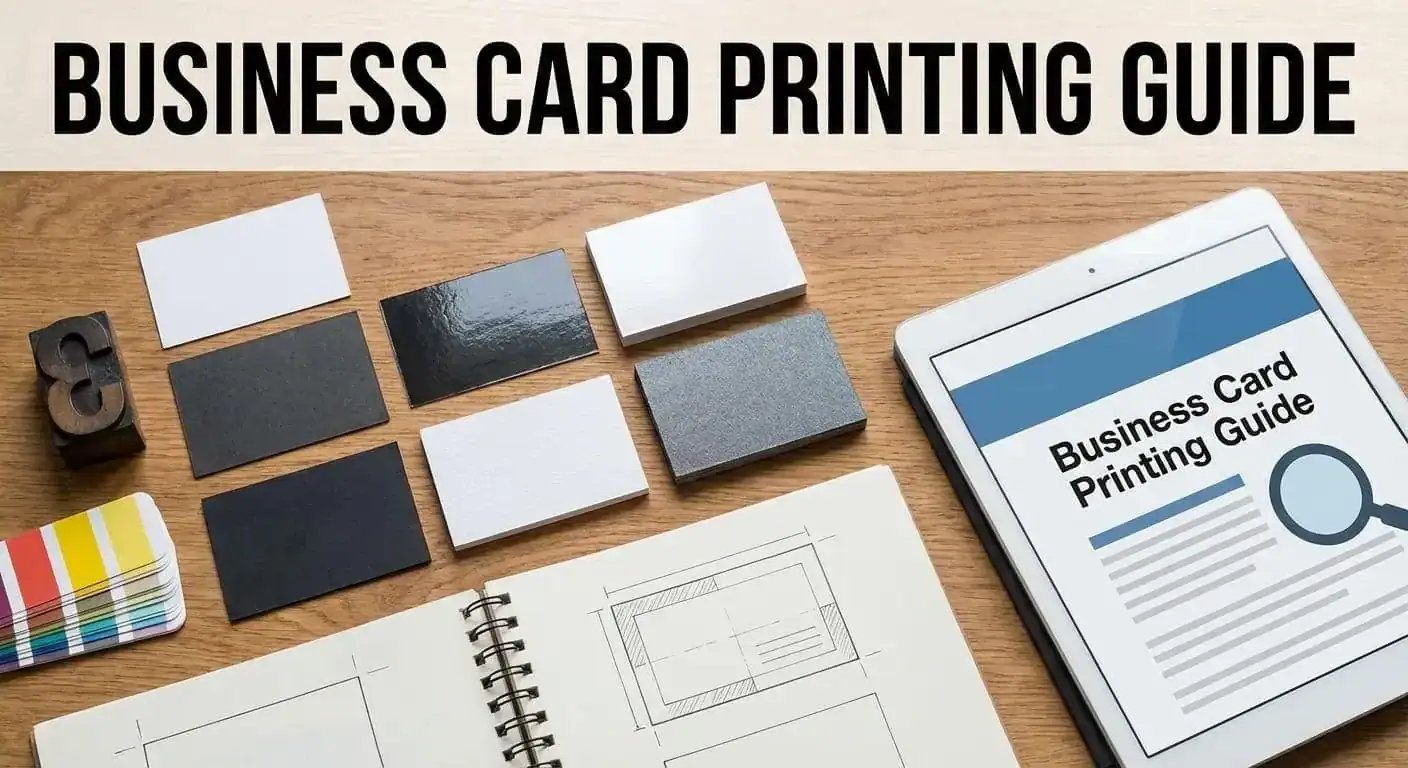
You’ve got 7 seconds to make a first impression. That’s it. And handing someone a flimsy, poorly designed business card in those 7 seconds? That’s not just a missed opportunity it actively damages your credibility. Business card printing in the UK has never been more accessible or more competitive, which means the bar for quality has never been higher.
Whether you’re a sole trader, a startup founder, or running an established business, this business card printing guide covers everything you need to know from choosing the right paper stock to getting your design print-ready. Let’s crack on.
What Is Business Card Printing?
Business card printing is the process of professionally producing small, portable cards that carry your key contact and brand information. They’re handed out at meetings, events, trade shows, and networking sessions as a tangible extension of your brand.
In the UK, standard business cards measure 85mm x 55mm the same size as a credit card and universally recognised across industries. While digital alternatives exist, a well-printed physical card still carries weight (sometimes literally) that a LinkedIn QR code simply can’t replicate.
Why Business Card Printing Still Matters
Some people assume business cards are outdated. They’re wrong. Here’s why they still matter for UK business owners:
- First impressions stick. A quality card with a premium finish says “we take our brand seriously” before you’ve said a word.
- Networking events are back. Post-pandemic, in-person events have surged. Cards remain the fastest way to exchange contact details professionally.
- They’re cost-effective marketing. For as little as a few pence per card, you get a branded touchpoint that can circulate for months.
- They work offline. No Wi-Fi needed. No app required. Just hand it over.
Studies consistently show that 72% of people judge a company by the quality of their business card. That’s not a vanity metric that’s your reputation in someone’s pocket.
How Business Card Printing Works
The process at an online print shop like LBG Print Shop is straightforward. Here’s what happens behind the scenes:
Your artwork file is sent to a digital or litho printing press, where ink is applied to your chosen card stock. The sheets are then cut down to your specified size, and any finishing (lamination, foiling, embossing) is applied afterwards.
The two main printing methods are:
- Digital printing ideal for smaller quantities, faster turnaround, cost-effective for runs under 500 cards.
- Litho (offset) printing better for larger runs, superior colour consistency, and sharper detail on complex designs.
Most UK online print shops, including LBG Print Shop, use digital printing for standard orders, which gives excellent quality at low minimums.
Step-by-Step Guide to Ordering Business Cards Online
This is where most people trip up. Follow these steps and you’ll avoid the most common pitfalls:
- Decide on your size and shape. Standard (85x55mm), square, or rounded corners pick what suits your brand.
- Choose your paper stock. The most popular options are 350gsm (standard), 400gsm (premium), and 450gsm (luxury thick card).
- Select a finish. Matt laminate, gloss laminate, soft-touch, or uncoated each creates a very different feel.
- Prepare your artwork. Set your file to CMYK colour mode, 300 DPI resolution, and include a 3mm bleed around the edges.
- Check what’s on your card. Before uploading, make sure you’ve included everything essential if you’re not sure, read our guide on what to put on a business card UK to cover all the bases.
- Upload and proof. Always check the digital proof before approving. Look at margins, text cut-off, and colour.
- Choose your quantity and turnaround. Most UK printers offer 1–5 day turnaround on standard orders.
- Place your order and wait for delivery. Simple as that.
Common Business Card Printing Mistakes to Avoid
These mistakes are surprisingly common and completely avoidable:
- Using RGB instead of CMYK. What looks great on screen can print muddy or dull. Always convert to CMYK before sending to print.
- Ignoring bleed and safe zones. Text too close to the edge gets cut off. Keep all important content at least 3mm from the trim line.
- Going too thin on the card stock. Anything below 300gsm can feel cheap and flimsy. It reflects badly on your brand.
- Choosing a font that’s too small. Under 8pt is hard to read in print. Keep body text at 8–10pt minimum.
- Ordering only 50 cards. Print more than you think you need. Unit cost drops significantly at higher quantities, and you’ll always use them.
Expert Tips for Stunning Business Cards
Here’s where good cards become great ones:
Go for soft-touch laminate if you want to stand out. It has a velvet-like feel that people comment on every single time. It’s a small upgrade in cost but a huge upgrade in perceived quality.
Use the back of the card. Most people leave it blank. Use it for a tagline, a QR code, a bold graphic, or even a useful reference table relevant to your industry. Double-sided printing costs very little extra.
Match your finish to your brand personality. Gloss suits bold, modern brands. Matt suits creative and minimalist brands. Soft-touch suits premium or luxury services.
The LBG Framework for a Memorable Card: Think of your business card in three layers Identity (name, job title, logo), Contact (phone, email, website), and Differentiator (something that makes you memorable a tagline, a social handle, a QR code). Most cards nail the first two but ignore the third.
Order a sample pack before your main run. Many UK printers offer sample packs so you can feel the card stocks and finishes before committing to hundreds of copies.
Frequently Asked Questions
What is the standard business card size in the UK?
The standard UK business card size is 85mm x 55mm, matching the dimensions of a credit card. This size fits standard cardholders and wallets, making it the most widely accepted format for professional use across all industries.
How much does business card printing cost in the UK?
Costs vary by quantity, stock, and finish. A run of 100 standard business cards typically starts from around £10–£20 at most UK online printers. Premium finishes like soft-touch or foiling cost more, but bulk orders significantly reduce the price per card.
What file format should I use for business card printing?
PDF is the preferred format for most UK printers. Make sure your file is in CMYK colour mode, set to 300 DPI, and includes a 3mm bleed on all sides. High-resolution JPEGs are also accepted by many printers for simpler designs.
How long does business card printing take in the UK?
Most UK online print shops offer a turnaround of 2–5 working days for standard orders. Express options (24–48 hours) are available at most printers, including LBG Print Shop, though they usually carry a small surcharge.
What paper thickness should I choose for business cards?
350gsm is the industry standard and suits most business cards well. For a more premium feel, 400gsm or 450gsm options are worth the small extra cost they feel noticeably more substantial and make a stronger impression.
Can I print business cards with a glossy finish on one side only?
Yes. Spot UV and single-sided laminate finishes are widely available. A popular option is a gloss or soft-touch front with an uncoated back the contrast looks sharp and the uncoated side takes pen ink well if you need to write on it.
Conclusion
Great business card printing isn’t just about ink on card — it’s about brand confidence. The right stock, the right finish, and a design that actually says something about you can turn a simple card into a genuine conversation starter.
Here are the three things to take away: always design in CMYK at 300 DPI, choose a card stock of at least 350gsm, and never underestimate the power of a premium finish to set you apart from the competition.
Ready to get your cards sorted? Head over to LBG Print Shop and get an instant quote today — choose your size, pick your finish, and have professionally printed business cards delivered straight to your door. You’ll wonder why you waited this long.