
£0.00
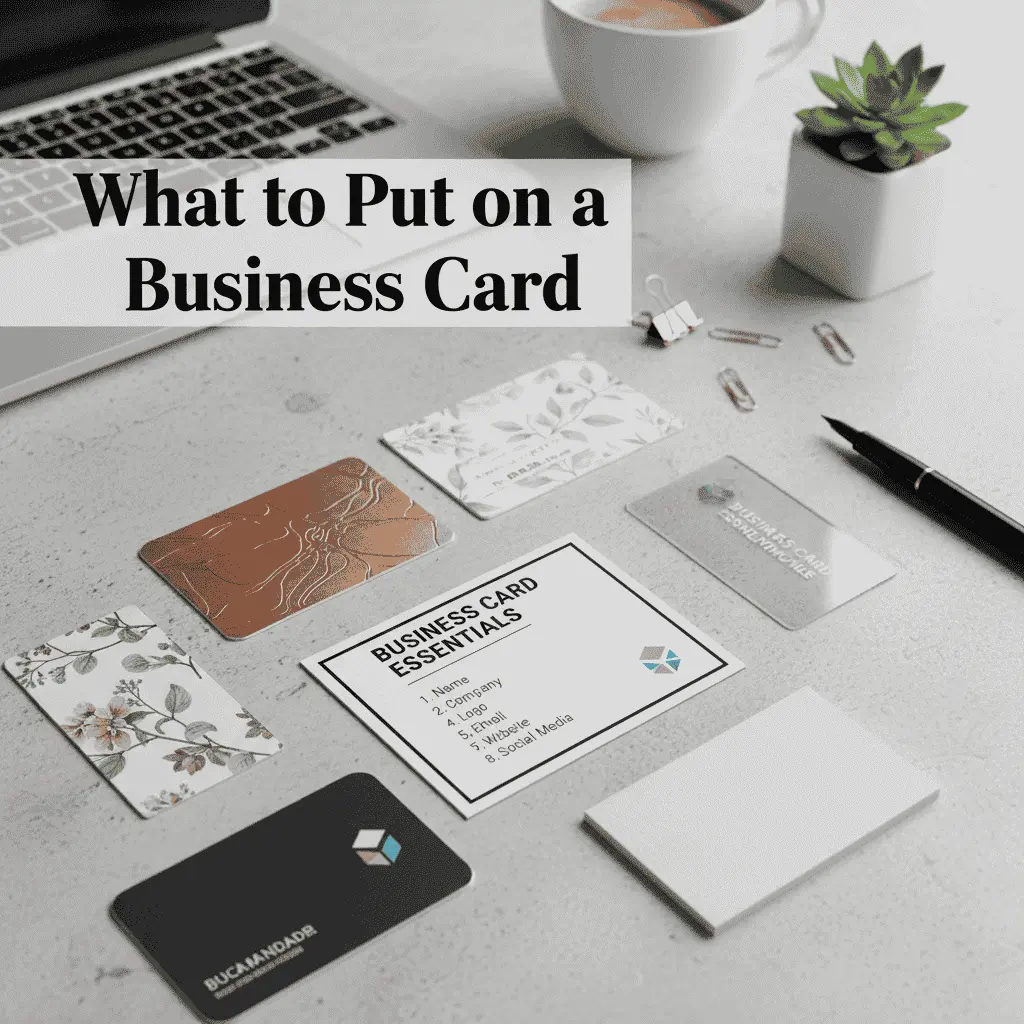
You only get one chance to make a first impression and your business card is often that chance.
Whether you’re a freelancer handing cards out at a networking event or a small business owner meeting clients for the first time, a poorly designed card can quietly undo all the confidence you just built in that handshake. A great one? It keeps you in someone’s mind long after the conversation ends.
This guide walks you through exactly what to put on a business card in the UK from the non-negotiable essentials to the smart extras that make people actually hold onto yours.
What Goes on a Business Card: The Basics Explained
A business card is a small, portable summary of who you are and how to reach you. In the UK, they’re still one of the most effective networking tools available simple, tangible, and personal in a way digital contact sharing just isn’t.
But “small” doesn’t mean “simple to design.” Every element on your card needs to earn its space. Clutter kills credibility. Minimalism, done right, builds trust instantly.
The goal is clarity: your card should answer three questions in under five seconds.
- Who are you?
- What do you do?
- How can I contact you?
Everything on your card should serve those three answers.
Benefits of Getting Your Business Card Right
Most people underestimate what a well-crafted business card actually does for their business. Here’s what you gain when you get it right:
Instant professional credibility. Handing over a quality card signals that you take your work seriously. It creates a physical anchor for the conversation you just had.
Brand reinforcement. Every time someone sees your card tucked in their wallet, pinned to a board they see your brand. That’s passive, ongoing marketing with zero additional cost.
Better recall. Studies consistently show that people remember physical interactions better than digital ones. A card with good design and the right information is far more likely to be kept and acted on.
Efficient networking. Instead of fumbling with phones to exchange numbers, a card exchange takes three seconds. It feels professional, confident, and intentional.
Lead generation on autopilot. Cards get passed between people. One card you gave out six months ago can end up in the hands of your next client.
How a Business Card Actually Works for Your Brand
Think of your business card as a miniature brand ambassador. It carries your colours, your tone, your font, your logo the whole visual language of your business and puts it directly into someone’s hands.
In the UK market especially, where professional services are highly relationship-driven, cards signal legitimacy. Tradespeople, consultants, creatives, and corporate professionals all use them and clients notice when you don’t have one.
Your card doesn’t just share contact details. It communicates:
- The quality of your work (through print quality and design)
- Your attention to detail (through layout and accuracy)
- Your brand personality (through colours, tone, and style)
A card printed on flimsy paper with a cluttered layout says something. So does one printed on premium stock with a clean, confident design. Both speak before you even open your mouth.
Step-by-Step Guide: What to Put on a Business Card in the UK
Here’s a complete, priority-ordered breakdown of every element your card needs and exactly how to handle each one.
Step 1: Your Full Name
This sounds obvious, but people get it wrong.
Use the name you actually go by professionally not a nickname, not your full formal name if no one uses it. If you’re “Mike” in business, don’t put “Michael.” Consistency across your card, LinkedIn, email signature, and website builds recognition and trust.
Font size tip: Your name should be one of the largest pieces of text on the card. It’s your most important identifier.
Step 2: Your Job Title or Role
Be specific, but stay accessible. “Managing Director” is clear. “Chief Happiness Architect” might feel clever to you, but it confuses the person reading your card three weeks later.
If your industry uses standard titles, stick to them. If you’re a freelancer or sole trader, something like “Graphic Designer” or “Interior Consultant” tells people exactly what you do without any guesswork.
Step 3: Your Business Name and Logo
Your trading name and logo anchor the card to your brand. Place these prominently usually at the top or alongside your name so the card immediately reads as professional and branded rather than personal.
At LBG Print Shop, we always recommend providing your logo in a high-resolution vector format. This keeps it crisp at any size, especially on smaller card dimensions.
Step 4: Phone Number
In the UK, include your full number with the dialling code if you do any international business for example, +44 7700 900000 rather than 07700 900000.
If you have a dedicated business mobile and a landline, include both. Label them clearly: “Mobile:” and “Office:” so people know which to use in what context.
Step 5: Email Address
Use a professional email ideally one at your business domain (yourname@yourbusiness.co.uk). A Gmail or Hotmail address on a business card immediately undermines the professional impression you’re trying to create.
Keep it short if you can. Long, complex email addresses are easy to mistype. If your domain allows it, something like hello@yourbusiness.co.uk or your first name is clean and memorable.
Step 6: Website
Your website is where the full conversation happens. Your card starts it your site closes it.
Always include the full URL, and make sure the site is live, mobile-friendly, and up to date before you print thousands of cards. There’s nothing worse than handing someone a card pointing to a broken or outdated site.
Step 7: Physical Address (If Relevant)
Not every business needs this. Service-based businesses, freelancers, and remote workers often don’t need to include an address and doing so can actually raise questions you don’t want to answer.
If you have a physical location a shop, studio, clinic, or office include the full address. It builds trust and helps clients find you easily.
If you work from home and don’t want to include your home address, consider using a registered business address service, which is widely available in the UK.
Step 8: Social Media Handles (Selected)
Don’t list every platform you’re on. Choose one or two where you’re genuinely active and where your target audience is most likely to engage with you.
For B2B businesses, LinkedIn is almost always worth including. For creatives, photographers, and lifestyle brands, Instagram makes more sense. Use the platform icon alongside your handle for instant recognition.
Step 9: QR Code (Optional but Increasingly Powerful)
QR codes have had a genuine resurgence in the UK, particularly post-pandemic. A well-placed QR code on your business card can link to:
- Your portfolio or website
- A digital contact card (vCard)
- A specific landing page
- Your LinkedIn profile
Keep it unobtrusive it shouldn’t dominate the design but it adds a smart layer of functionality that tech-comfortable recipients genuinely appreciate.
Step 10: A Tagline or Short Value Statement (Optional)
A single line that captures what you do or what you stand for can elevate a standard card into something memorable. Keep it to under ten words. It should clarify, not decorate.
For example: “Custom print solutions, delivered with precision.” Or: “Helping London businesses look the part.” Short, specific, and useful.
Common Mistakes People Make When Designing Business Cards
These are the errors we see most often at LBG Print Shop and they’re all entirely avoidable.
Using too many fonts. Stick to two maximum one for headings, one for body text. Any more and the card looks chaotic and unprofessional.
Making the text too small. Readability matters. If someone needs to squint, they’ll give up. Keep body text at 8pt minimum ideally 9–10pt.
Forgetting to proofread. A typo in your email address or phone number means all those cards are useless. Proofread. Then proofread again. Then ask someone else to check.
Using low-resolution images. Pixelated logos and blurry photos look amateurish in print even if they looked fine on screen. Always supply print-ready files at 300dpi minimum.
Not leaving a bleed area. When cards are cut during printing, small shifts can happen. Without a bleed (an extra 3mm of background extending beyond the cut line), you risk white edges appearing on a coloured card. Any reputable UK printer will request bleed-safe files.
Overcrowding the card. White space is not wasted space. It makes your card easier to read and more visually sophisticated. Less, genuinely, is more.
Using a personal email address. As mentioned above, a @gmail.com email on a professional business card chips away at credibility. It’s a small fix with a significant impact.
Printing on both sides without purpose. A double-sided card is a great opportunity but only if you have something meaningful to put on the back. A cluttered back side is worse than a blank one.
Expert Tips for Business Cards That Actually Get Kept
These are the details that separate forgettable cards from the ones people pin to their notice boards.
Invest in paper quality. In the UK, 400gsm silk or uncoated stock feels substantial and premium. Thin, flimsy cards get thrown away. A heavier card signals quality before you’ve even read a word.
Consider a finish. Matt lamination gives a sleek, modern feel. Gloss lamination makes colours pop. Spot UV coating a gloss finish applied to specific elements like your logo creates a tactile, luxury feel that stands out in a pile of standard cards.
Keep your back side intentional. Use it for a service list, a QR code, a key message, or simply your logo at scale. A thoughtful back side doubles your available space without doubling the clutter.
Match your card to your brand. Your card should look like it belongs to the same family as your website, social media, and other marketing materials. Consistency is the foundation of brand recognition.
Order in appropriate quantities. UK printing is significantly cheaper per unit at higher quantities. If you’re confident in your details, ordering 500 or 1,000 cards at once is far more cost-effective than ordering 100. Just make sure every detail is correct first.
Don’t DIY unless you’re a designer. Free online card builders often produce generic, low-quality results. A professional designer or a full-service print shop like LBG Print Shop that offers design and print together will produce a result that actually represents your business well.
Frequently Asked Questions
What is the standard business card size in the UK? The standard UK business card size is 85mm x 55mm the same dimensions as a credit card. This size fits standard cardholders and wallets, making it easy for recipients to store. Some businesses opt for slim cards (85mm x 45mm) or square cards for a distinctive look, but standard dimensions are the safest choice for most.
Do I need to include my address on a business card in the UK? No it’s entirely optional. If you have a physical premises that clients visit, include it. If you’re a freelancer or remote service provider, you can leave it off. Many UK businesses now omit their address entirely, particularly if they work nationally or from a home office.
Should I put my social media on my business card? Only include social media if you’re active on the platform and it adds value for your audience. One or two relevant handles LinkedIn for B2B, Instagram for creative industries are plenty. Avoid listing every platform you’ve ever signed up for.
How much does it cost to print business cards in the UK? Costs vary depending on quantity, paper stock, and finish. Basic cards start from around £20–£30 for 100 units, while premium options with special finishes can run higher. Ordering in bulk (250–1,000+) significantly reduces the cost per card and is recommended if your details are settled.
What information should I leave off my business card? Leave off anything that clutters the design without adding value. This includes your full postal address if you don’t receive clients in person, personal social media profiles, fax numbers (unless your industry still uses them), and any details that might change soon like a phone number you’re considering switching. Keep it current, clean, and purposeful.
Can I put a QR code on my business card? Absolutely and it’s increasingly common in the UK. A QR code can link to your website, portfolio, digital business card, or a specific landing page. Just make sure the destination is mobile-optimised and genuinely useful. A QR code linking to a poor website does more harm than good.
Conclusion: Make Your Card Count
Your business card is one of the smallest investments you’ll make in your business and one of the highest-return ones when you get it right.
Start with the essentials: your name, role, business name, phone, email, and website. Add carefully chosen extras a QR code, a social handle, a tagline only where they genuinely serve your audience. Invest in quality paper and print. And make sure every detail is correct before you approve the final proof.
A card that looks good, reads clearly, and carries the right information doesn’t just share your contact details it tells people you’re someone worth contacting.
Ready to print a card that does your business justice?
At LBG Print Shop, we help businesses across the UK design and print business cards that make a lasting impression from premium paper stocks and finishes to full custom design support. Whether you’re starting from scratch or refreshing an existing design, our team is ready to bring it to life.
Get in touch with LBG Print Shop today and let’s create something worth keeping.